New Scientist
Will physics be the next field to be turned upside down by AI?
AI has taken huge strides in computer programming and mathematics – physics could be next
1h ago
AI has taken huge strides in computer programming and mathematics – physics could be next
1h ago
APOD Science APOD APOD: 2026 October 16 –… Today’s APOD Archive Submissions Index Search Calendar RSS Education About Discuss APOD Astronomy Picture of the Day Discover the cosmos! Each day a different image or photograph of our fascinating universe is featured, along with a brief explanation written by a professional astronomer. To view this […]
3h ago
High-definition images of nighttime lights show where the hurricane knocked out power along the Florida Panhandle and how quickly the lights came back.
3h ago
MIT's Center for Transportation and Logistics finds sustainability commitments are strong, but governance gaps and external disruptions prevent execution.
10h ago
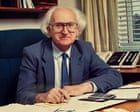
My brother Norman McCubbin, who has died aged 77, was a scientist who worked at the forefront of experimental particle physics. A leading light in experiments that took place on the Large Hadron Collider, the world’s biggest and most powerful particle accelerator at the European Organization for Nuclear Research (Cern) in Switzerland, he spent the last five years of his working life as director of the particle physics department at the Rutherford Appleton Laboratory (RAL) in Oxfordshire, until his retirement in 2012. Afterwards he became a tutor to undergraduates at St Anne’s College, Oxford, and was still in that role at his death. Continue reading...
12h ago
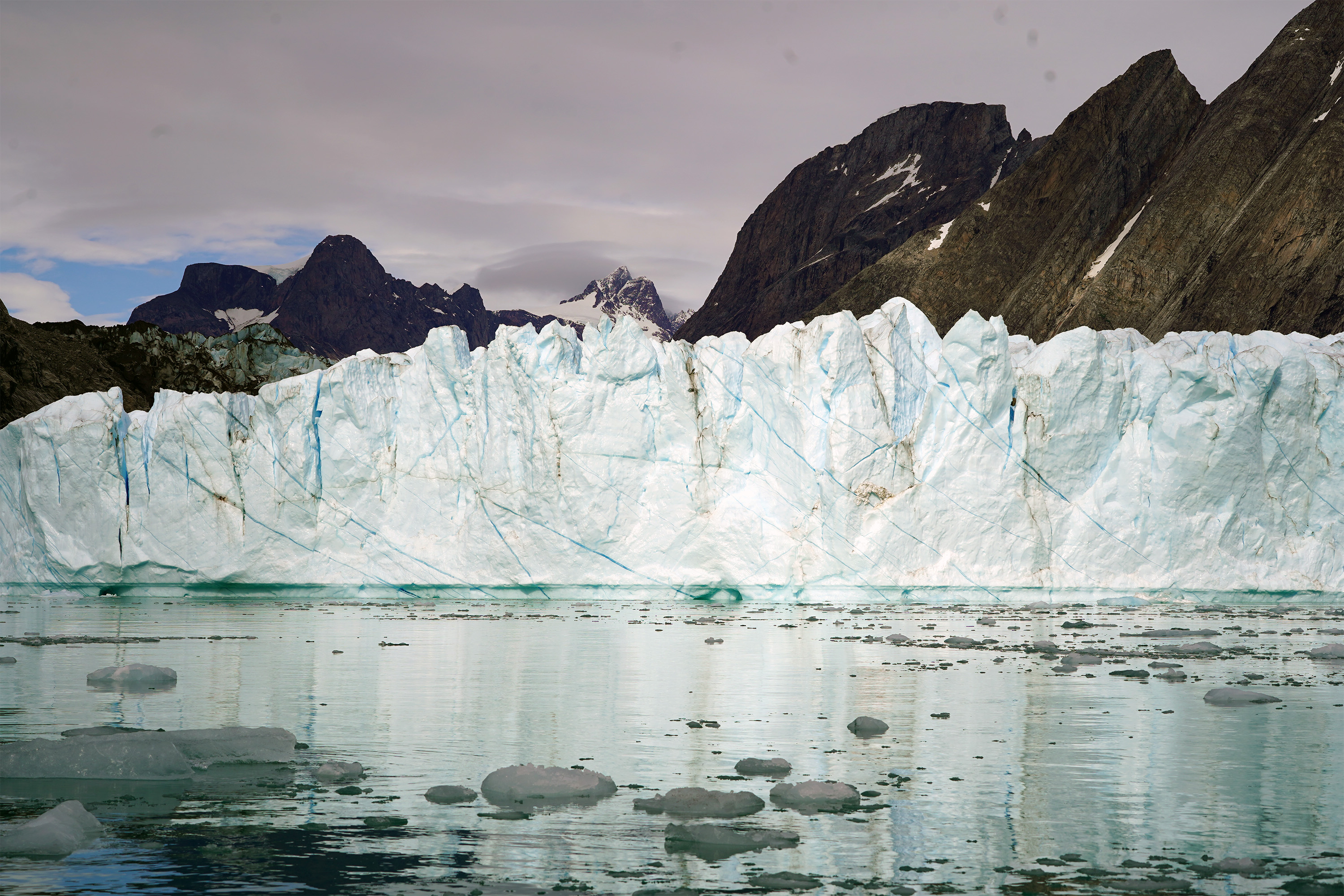
The cliffs don’t always collapse in the runaway process that scientists had expected.
13h ago
From the International Space Station’s unique position 250 miles above Earth, the Sun is a vital source of energy. Solar power supports the station’s life support systems, daily activities, and hundreds of research investigations that improve life on Earth and prepare humans for deep space exploration. Over the past five years, NASA augmented the station’s […]
14h ago
Delegates from 69 countries approve clock changeover after decades of debate – but switch may not take effect for thousands of years After decades of discussion, quibbling and worrying about clocks in computer systems, the world’s official timekeepers have voted to replace what many viewed as a tiresome correction: the leap second. It’s time, they say, for the leap hour. Delegates from 69 countries cast their votes on Thursday at a conference in France of the International Bureau of Weights and Measures, which ensures the world sticks to the same standards of time, weight, distance and more. Continue reading...
15h ago
NASA is playing an important role in JAXA’s (Japan Aerospace Exploration Agency) MMX (Martian Moons eXploration) mission, to advance our understanding of Mars’ moons and build on the agency’s long history of exploring the Red Planet. The mission aims to characterize and determine the origin of Mars’ moons Phobos and Deimos and deliver a sample […]
11h ago
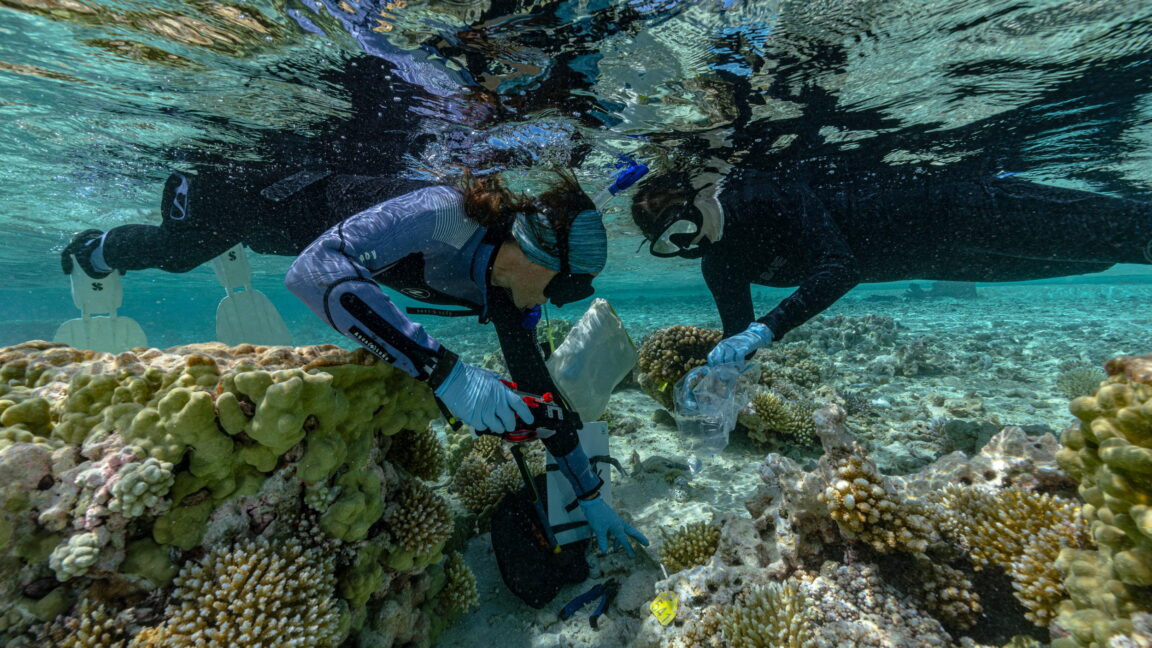
Seabirds, native plants, and healthy reefs can help atolls build as seas rise.
16h ago
Computer models suggest that unrealistically cold oceans would be insufficient to stop Thwaites glacier retreating, although a neighbouring glacier might begin to grow
11h ago
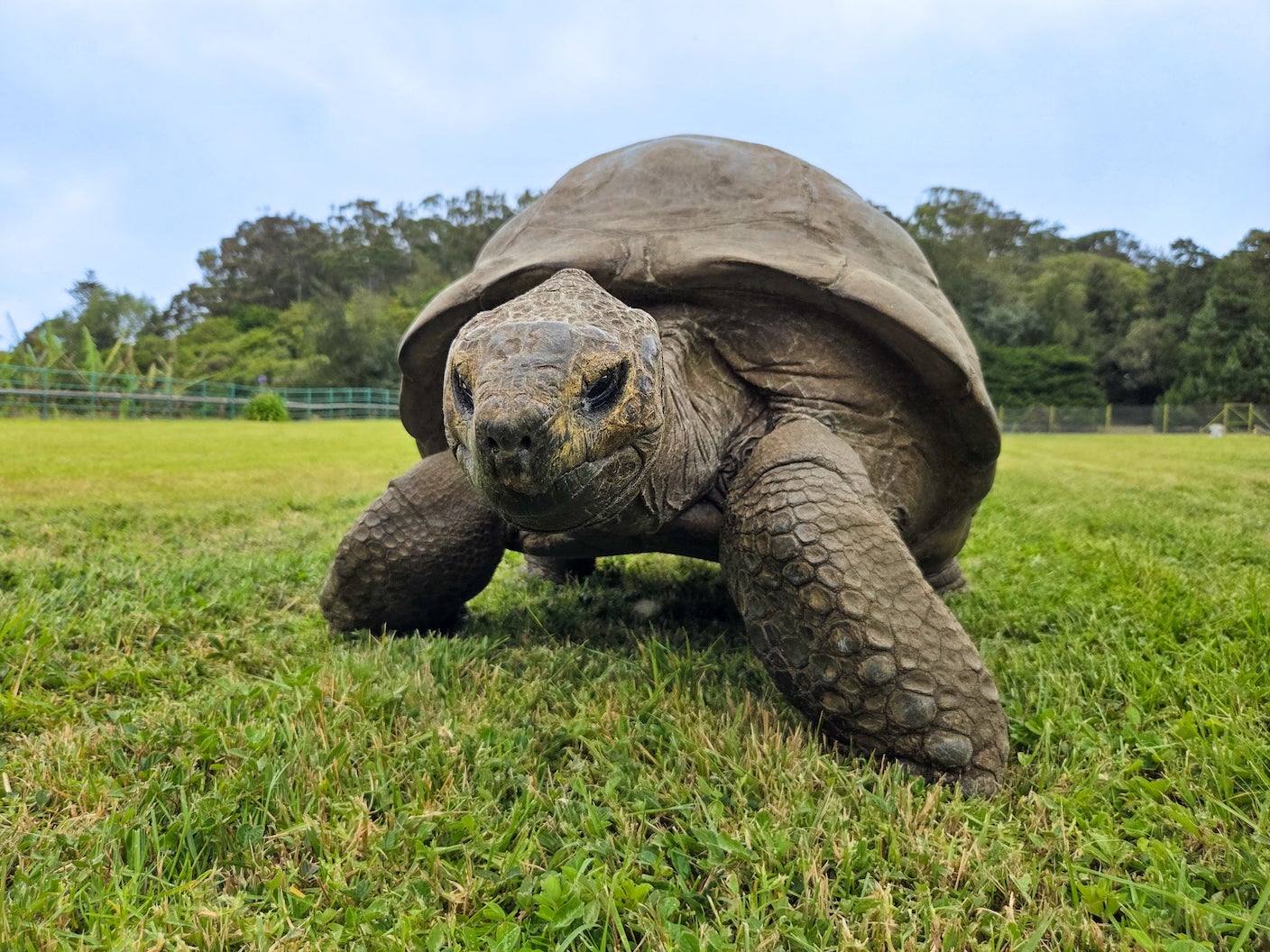
Jonathan the giant tortoise was born when Darwin was still a young man. Youthful gene activity may account for his exceptionally long life. The post The Oldest Living Land Animal Is 194. DNA May Now Reveal the Secret to His Longevity. appeared first on SingularityHub .
17h ago
Governments and private companies often work together to provide public services online. A new study asks: How do these partnerships affect people’s trust in government?
18h ago
Adult excavated in an Iraqi Kurdistan cave died more than 70,000 years ago and bears ‘kill shot’ shoulder wound A smooth round hole in the shoulder blade of a Neanderthal who died more than 70,000 years ago may be the oldest evidence so far of a human ancestor being killed by a wooden spear. Archaeologists spotted the distinctive injury after excavating skeletal remains of the adult and other Neanderthals from under nearly 8 metres of rock and sediment in the Shanidar cave in Iraqi Kurdistan. Continue reading...
16h ago
Evolutionary biologist Toby Kiers explains how fungal networks in soil trade nutrients with plants, help keep carbon underground, and strike bargains without having a brain. The post How Do Fungi Keep the Planet Healthy? first appeared on Quanta Magazine
18h ago
A NASA Dynamic Aviation A200 aircraft will conduct low-flying research flights over farmland near Transit, Texas, from Thursday, Oct. 22, through Monday, Nov. 9. These flights will measure gaseous and particulate emissions from animal feeding operations. Agricultural emissions represent an important and understudied part of Earth’s land and atmosphere systems. The FarmFlux mission will deploy […]
15h ago
A phenomenon rarer than a solar eclipse and more powerful than any single storm system is unfolding this fall, and NASA is tracking it closely. El Niño is a natural climate pattern that emerges roughly every two to seven years marked by warmer-than-normal water temperatures in parts of the equatorial Pacific. NASA scientists are keeping […]
13h ago
Starting in January, students attending Skyview High School in Virginia will learn about the building blocks and principles underlying quantum computers by working with one directly
12h ago
We still don't know for sure how the ice cliffs looming over the sea at the leading edge of some glaciers will behave as the climate warms, but satellite data offers some clues
13h ago
Error-proofing the most important operations performed on a quantum computer has so far required lots of resources, but a new experiment shows a more efficient way to make the devices reliable
13h ago
Workers have always been monitored by their bosses, first through output targets, and then via computer software labelled ‘bossware’. But AI is transforming the capabilities of these systems, processing huge volumes of data to provide minute-by-minute accounts of activity, and productivity. To find out more, Ian Sample hears from UK technology editor Robert Booth. He explains which sectors are adopting this approach, why they are doing it, and how it could end up being counterproductive. Continue reading...
20h ago
Government physicist whose radar research paved the way for flat-panel TV and computer screens based on liquid crystals Cyril Hilsum’s research into stable liquid crystals and the devices in which they could be used paved the way for the flat-panel television and computer screens that are now ubiquitous in homes, offices and public spaces. Hilsum, who has died aged 101, was leading a Ministry of Defence team at the Royal Radar Establishment (RRE) in Malvern, Worcestershire, in the late 1960s when Harold Wilson’s Labour government, looking to develop a new generation of miniature radar systems, tasked him with creating flat displays to replace the bulky cathode-ray-tube screens used for traditional radar set-ups. Continue reading...
20h ago
Registration is open for the 2026 NASA Space Apps Challenge, a two-day global event on Saturday, Nov. 14 and Sunday, Nov. 15, where teams work to create solutions inspired by NASA’s most ambitious exploration goals and making use of the agency’s free and open data. The annual challenge, often called a hackathon, is an intensive, […]
15h ago
Researchers are using robotic tickling devices to uncover one of the strangest mysteries of human behaviour.
14h ago
Babies who are formula fed are more prone to infections, but the addition of a probiotic supplement containing sugars from breast milk slashed the risk of such infants catching respiratory viruses
14h ago
NASA’s Artemis II mission sent four astronauts around the Moon and brought them safely back to Earth, laying a foundation for crewed flights to the Moon’s surface. Additional engineering data analysis of the Orion spacecraft’s heat shield confirmed initial data showing the heat shield performed as expected. In particular, NASA measured whether the thermal protection […]
16h ago
NASA has selected 12 U.S. institutions to receive $12 million to accelerate academic research and technology development in support of the agency’s priorities for exploring the Moon, Mars, and deep space. Through NASA’s Minority University Research and Education Project (MUREP) Space Technology Artemis Research (M‑STAR) initiative, selected institutions will each receive up to $1 million […]
15h ago
A formation of radio waves looks remarkably like a treble clef in this Oct. 14, 2026, image from NASA’s Chandra X-Ray Observatory. Researchers used Chandra to find that the Treble Clef is likely caused by an outburst from a supermassive black hole, followed by a collision of two galaxy clusters. Read more about this discovery. […]
17h ago
Newly introduced testosterone screening in the US Army could find more than 100,000 male soldiers with low testosterone
16h ago
A 75,000-year-old skeleton offers a glimpse into the violent world in which Neanderthals lived, but also offers hints that they cared for one another
16h ago