Dekipi
Today's Edition

Travel

The Guardian Travel

‘A haven of soft light, warm sunshine and sandy beaches’: readers’ favourite autumn escapes

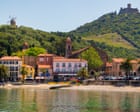
In search of autumn festivals, good food and islands where it still feels like summer? We asked you to recommend your best off-season breaks • Tell us about a spooky spot in the UK – the best tip wins a £200 holiday voucher Last October, while I was cycling around south-west France, near the Spanish border, a tip from a local waiter led me to Collioure , near Perpignan. The town was like a Mediterranean dream, where the summer crowds had faded, leaving behind a peaceful, artistic haven of soft light, warm sunshine, cobbled streets, sandy beaches – and the Pyrenees as a backdrop. In the early evening, the still balmy autumn air was perfect for wandering through the quiet, pastel-coloured alleyways of the Le Mouré district to enjoy €5 off-season happy hour wine with fish tapas. I had planned to stay a weekend but ended up staying a week, seduced by Collioure’s perfect autumn cocktail of chilled Catalan culture and sunkissed seaside sensuality. April Continue reading...

1h ago

More Stories

Atlas Obscura

Abandoned Agricultural Mill in Śmiałowice, Poland

Tucked away in the Polish countryside stands an impressive early 20th-century agricultural mill complex that looks more like a grand estate than a heavy industrial facility. Dominated by a striking multi-story central tower with a decorative roof, the building represents a era when industrial architecture was built with notable aesthetic ambition. Inside, the structure retains an eerie atmosphere of suspended time. A grand wooden and iron spiral staircase coils through the main tower, leading to spacious upper levels where vintage machinery, grain chutes, and wooden sifting equipment remain in place. Sunlight filters through arched windows and ivy-covered sashes, illuminating rooms that still hold original wooden doors, vintage lace curtains, and scattered remnants of daily operations. Though decay has set in, the complex remains an extraordinary capsule of Poland's rural industrial heritage.

11h ago

Atlas Obscura

Iron Fountain Gyumri in Gyumri, Armenia

If you go there in late February, the gray sky matches the mood perfectly. You walk down the cracked concrete of what used to be a grand Soviet boulevard, passing decaying apartment blocks. Just behind some overgrown bushes which look like a makeshift camp. The scale of it is incredibly imposing. Designed by architect Artur Tarkhanyan in 1982. In 1988, a devastating earthquake leveled most of Gyumri. The surrounding buildings crumbled to dust, but the fountain stubbornly survived. Its plumbing was permanently destroyed, and it never sprayed water again. Today, it just stands there, completely dry and rusting in the wind. But when you stand under it, you realize it is not just a forgotten piece of scrap metal. It feels like a genuine, accidental monument. It gives you a very raw, melancholic glimpse of what Gyumri was before the disaster, and what the city was supposed to become. If you appreciate unfiltered history and that specific, quiet post-Soviet atmosphere, this place is absolutely worth the detour.

13h ago

Atlas Obscura

Milton College in Milton, Wisconsin

When Milton College finally closed its doors in 1982, it was the oldest institution of higher education in Wisconsin, beating the University of Wisconsin by four years. The college was originally called Du Lac Academy when it was founded in 1844. Main Hall and Goodrich Hall (the original dorm) – built in 1855 and 1857, respectively – are still standing. Milton College was ahead of its time in admitting women. It was a coeducational institution from the start. In comparison, the University of Wisconsin did not admit women until 1863 and did not give them full coeducational status until the 1870s, thanks in part to anti-coeducation resistance from UW President Chadbourne. Enrollment at Milton College fluctuated over the years, reaching over 800 by the late 1960s. At that time, new buildings were added, including more dormitories, a library, a student center and an athletic facility. Ultimately there were thirteen buildings on campus. All but one of these buildings survives, all adapted to new uses. Main Hall is now owned and operated by the Main Hall Preservation Society, while the library is home to the Milton Public Library. Like many small colleges, Milton College closed due to financial pressures, which caused it to lose its accreditation. Being heavily dependent on tuition without a large endowment, it went into debt and eventually closed when enrollment dropped in the 1970s and 1980s.

15h ago

Atlas Obscura

Grave of John Gray in Hiramsburg, Ohio

John Gray was born the oldest of eight children on January 6, 1764 on property belonging to George Washington near his Mt. Vernon estate. Clearly a loyal follower of Washington, his father enlisted on the side of the Patriots but was killed at the Battle of White Plains, leaving young John in charge of the family. He was just 13 years old. When he was 17, he joined the army and participated in the tail end of the Revolutionary War, participating in the Siege of Yorktown which secured the country its independence, realizing his father's dream. With the conflict over, he returned to Mt. Vernon to continue serving General Washington in a different capacity. In 1784, John Gray headed west to Morgantown, then still a part of Virginia, where he met his first wife and raised a family. Around 10 years after that, he headed west into Ohio. Biographer James Dalzell attributed the move to the fact that Virginian laws at the time disenfranchised poor, landless whites from voting. Around 1829, he made a cabin near Hiramsburg, Ohio his permanent and final home. Monetarily speaking, Gray lived a meager life, subsisting on a garden and whatever livestock he could raise. He outlived his wives and children and was in the care of an elderly step-daughter by the end of his life. James Dalzell, a fellow resident of Noble County, Ohio, became acquainted with Gray and was inspired by his patriotism and Christian ethics. As Gray had never applied for a pension (and only served six months anyhow), Dalzell acted as an advocate of sorts for the aging veteran, documenting his life stories and appealing to congressmen. In 1867, he was recognized as a Revolutionary War veteran and received a pension partially thanks to Dalzell's efforts. However, the following year, Gray would die on March 29, 1868 at the ripe old age of 104. Gray's claim as the longest surviving Revolutionary War veteran is contested. Daniel F. Bakeman lived until 1869 at age 109; however, he had no documents to prove his service (though friends and neighbors testified to his honest character, granting him the same pension as Gray). George Fruits, who died in 1874 supposedly at age 114, also purports to have served, but his claim is even more dubious, with one researcher claiming Fruits wasn't even born until 1779. Hence, Gray's superlative has to be qualified as "the longest surviving verified Revolutionary War veteran." Regardless, Gray lived through a century of American history. He was born while the French and Indian War raged and died while the wounds of the American Civil War were still fresh. He was a child when Daniel Boone crossed into Kentucky and an elderly man during the construction of the transcontinental railroad. The lifespans of several US presidents such as Andrew Jackson, James Polk, and Abraham Lincoln fit into his own time on earth. Gray fought for his country's independence and reaped almost a century's worth of rewards, both bitter and sweet.

17h ago